Situation report
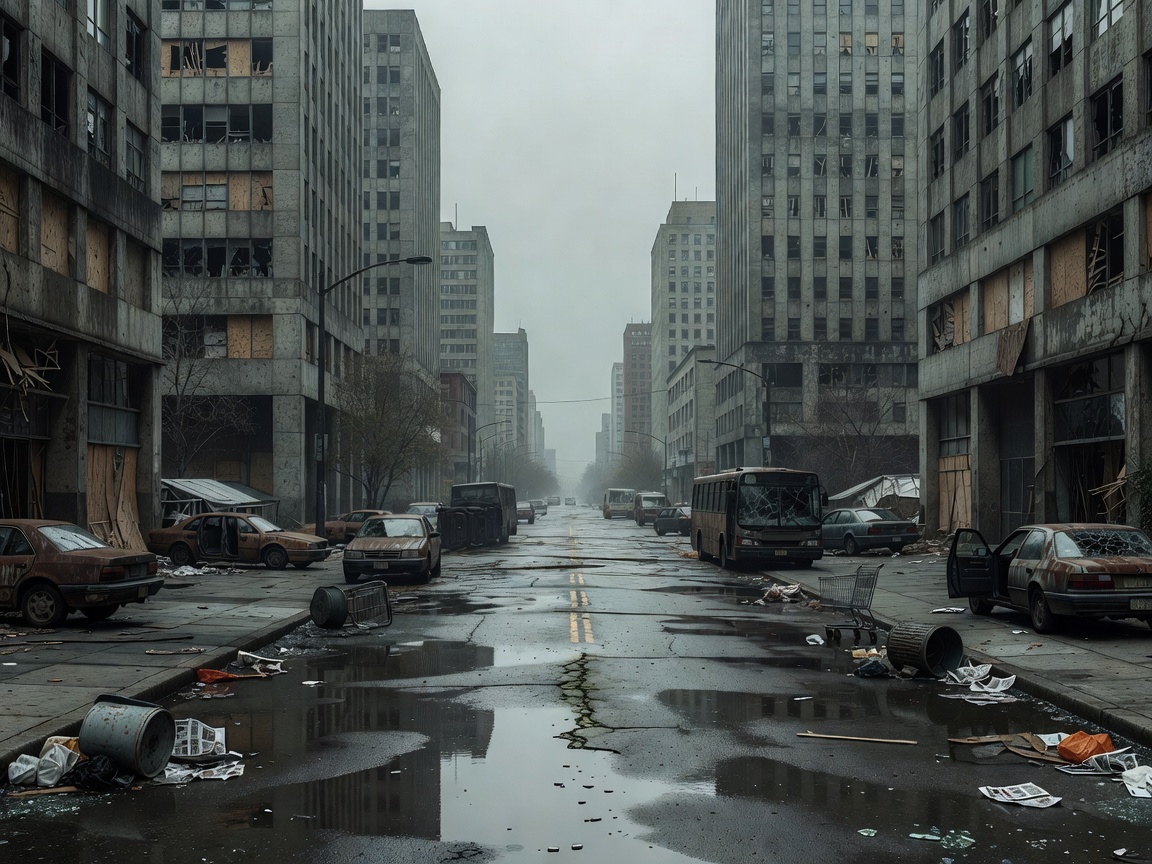
The film opens in a Cambridge research laboratory, where animal-rights activists break in to free caged chimpanzees. A scientist warns them the animals are infected with "Rage." They don't listen. Twenty-eight days later, bicycle courier Jim, played by Cillian Murphy, wakes from a coma in an empty London hospital and walks out into a city with no one in it: across Westminster Bridge, past abandoned buses, through streets papered with notices from missing families.
He is rescued by Selena (Naomie Harris) and Mark, who explain that the infection spreads through blood and saliva and takes hold within seconds. Later they join Frank (Brendan Gleeson) and his daughter Hannah, who have been sheltering in a tower block and have picked up a looped radio broadcast from soldiers near Manchester promising safety and "the answer to infection." The journey north, in Frank's black cab, leads to a fortified country house run by Major Henry West, played by Christopher Eccleston, and to a final act where the living become the worst threat of all.
Why this film still matters
The infected here are not technically undead; they are living people consumed by a virus of pure aggression. That distinction sparks endless "is it really a zombie film?" arguments, but its influence is not in doubt. Fast infected became a fixture of the genre through the 2000s and beyond.
The look was just as important. Much of the film was shot on consumer-grade Canon digital video cameras, giving it a smeared, handheld texture that feels closer to news footage than a Hollywood movie. The deserted London scenes were captured by closing streets for short windows at dawn, and they remain some of the most striking images in modern horror.
John Murphy's score, particularly the slow-building track "In the House – In a Heartbeat," was later reused in many trailers and other productions, which says a lot about its power.
Survival lessons from the Rage outbreak
- Decide in seconds. When Mark is infected, Selena acts immediately. The film's grim logic is that hesitation infects everyone.
- Protect your eyes and mouth. A single drop of infected blood is enough, as one devastating moment near the end of the journey shows.
- Secure water early. Frank's rooftop setup for collecting rainwater is one of the smartest pieces of survival thinking on this list.
- Treat broadcasts with caution. The promise of salvation turns out to be bait. Verify before you commit.
- Armed doesn't mean safe. The soldiers have walls and weapons, but their intentions towards Selena and Hannah make the manor more dangerous than the road.
Pros and cons for today's viewer
Pros
- Unforgettable empty-London opening.
- Terrifyingly fast, convincing infected.
- Strong performances from Murphy, Harris and Gleeson.
- Tight script that keeps characters grounded.
Cons
- Low-resolution digital image looks rough on large screens.
- Sharp tonal shift in the military third act.
- Purists may not count it as a zombie film.
- Some disturbing sexual threat in the final act.
How it compares
| Film | Threat | Transmission speed | Human antagonists |
|---|---|---|---|
| Night of the Living Dead | Slow ghouls | After death | Squabbling survivors |
| 28 Days Later | Living infected | Seconds | Soldiers |
| Train to Busan | Fast infected | Seconds to minutes | Selfish passengers |
Endings, sequels and viewing tips
During its US theatrical run, an alternate ending was added after the credits, and home video releases include further alternative endings, including one presented only as storyboards. Watch the main ending first; the alternatives are fascinating afterwards.
The story continued with 28 Weeks Later (2007), directed by Juan Carlos Fresnadillo, and 28 Years Later (2025), which reunited Boyle and Garland. If you like the original's raw energy, the sequels are worth following in order.