Situation report
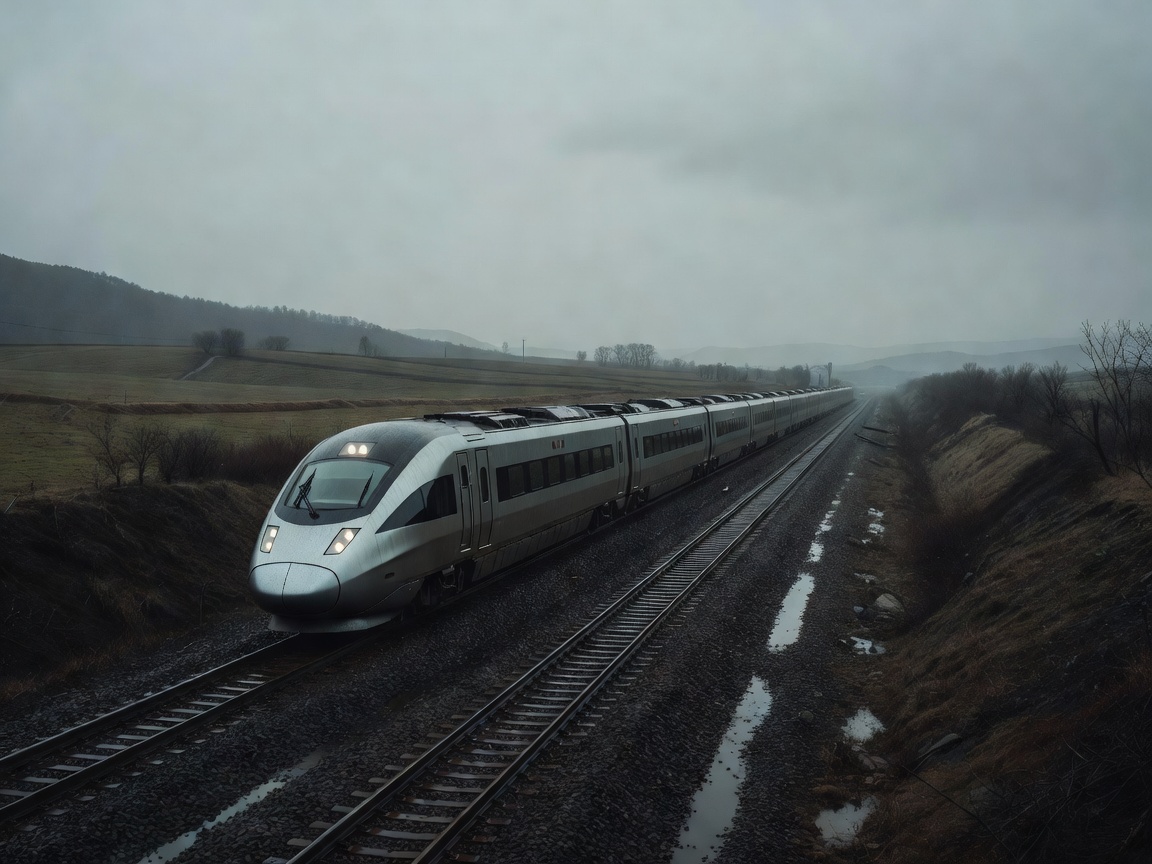
Seok-woo, played by Gong Yoo, is a workaholic fund manager who has little time for his young daughter Su-an (Kim Su-an). For her birthday she wants only one thing: to visit her mother in Busan. Reluctantly, he takes her on an early KTX high-speed train from Seoul. Moments before the doors close, an injured, convulsing woman slips aboard.
Within minutes the infection is tearing through the carriages. Among the passengers are Sang-hwa (Ma Dong-seok), a tough, warm-hearted working man travelling with his pregnant wife Seong-kyeong (Jung Yu-mi); high-school baseball player Yong-guk (Choi Woo-shik) and his friend Jin-hee (Ahn So-hee); and Yon-suk (Kim Eui-sung), a transport executive who puts his own survival above everyone else's. Planned stops at Daejeon and beyond promise safety, but news reports suggest the whole country is falling, and the train itself may be the only place left to hold on.
Why this film still matters
Train to Busan premiered in the Midnight Screenings section of the 2016 Cannes Film Festival and went on to become an international hit, introducing many viewers to Korean genre cinema. It proved that a zombie story could feel fresh by narrowing its focus to a single moving space.
Its infected are fast, twitching and horribly physical, often moving in waves that crash through doors and spill over each other. But the real subject is character. Seok-woo's arc from self-interest to sacrifice, set against Yon-suk's ruthless selfishness, turns the film into a sharp commentary on class, privilege and what people owe each other in a crisis.
Yeon Sang-ho came to live action from animation, having directed the acclaimed animated features The King of Pigs and The Fake. He also made Seoul Station, an animated prequel released the same year, which shows the start of the outbreak in the capital.
Survival lessons from the carriages
- Learn how the threat senses you. The survivors discover that the infected lose track of prey in darkness. Tunnels become a lifeline, and covering windows buys crucial seconds.
- Improvise armour. Taping magazines and cloth around the forearms protects against bites, a simple trick that makes close combat survivable.
- Use the environment. Luggage racks become crawlways over a packed carriage. Tight corridors limit how many attackers can reach you at once.
- Beware of those who close doors on others. The deadliest decisions come from frightened passengers barricading themselves against the people trying to reach them.
- Protect the vulnerable first. The film's moral compass is clear: survival alone, at any cost, isn't worth much.
Pros and cons for today's viewer
Pros
- Brilliantly paced, with almost no wasted scenes.
- Inventive action in a confined setting.
- Ma Dong-seok steals every scene he's in.
- An emotional payoff that lands for most audiences.
Cons
- Leans into melodrama in places.
- The main human villain can feel one-dimensional.
- Some digital horde shots look less convincing.
- Subtitled, which some viewers avoid; dubs are available.
How it compares
| Film | Space | Infected speed | Emotional core |
|---|---|---|---|
| Night of the Living Dead | Static house | Slow | Fear and distrust |
| Train to Busan | Moving train | Fast | Parent and child |
| World War Z | Global | Fast swarms | Protecting family |
Prequel, sequel and viewing tips
Watch the film in Korean with subtitles if you can; the performances carry more weight in their original language. Seoul Station works best watched after the main film, as a darker companion piece. Peninsula (2020), also directed by Yeon Sang-ho, is a stand-alone sequel set years later in a devastated Korea. It is more of an action film, with a larger scale and a very different feel.